Rehabilitation starts by identifying exactly what is injured and how much load it can tolerate, not by prescribing a standard set of exercises. You will be able to recognise each stage, understand when clinicians progress or reduce the workload, and judge readiness for training or competition using measurable signs rather than pain relief alone.
Key takeaways
- Get an assessment before training through pain or returning to sport.
- Protect the injury while maintaining safe, pain-limited movement.
- Increase workload when strength, balance and movement quality meet clear goals.
- Return to competition through staged training, not a single pain-free day.
What happens at the first assessment, and how is the injury identified?
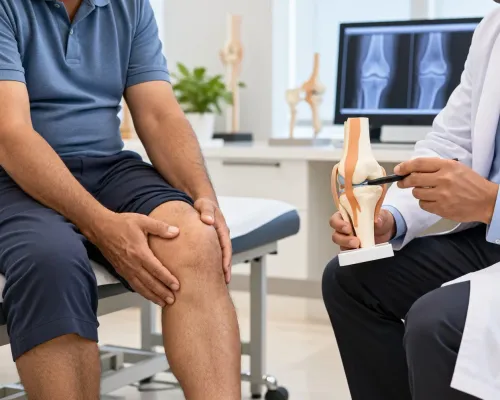
The first appointment establishes a baseline and decides whether rehabilitation is appropriate or urgent medical assessment is needed. This baseline anchors the sports injury rehabilitation process in Worli, allowing progress to be measured by findings rather than by pain alone.
1. The clinician records how the injury happened, your recent training volume, pain pattern, swelling, locking, giving way, numbness and previous injuries. Explain what you could and could not do immediately afterwards.
2. The examination checks active and passive range of motion, walking or loading tolerance, strength, balance and joint stability. Sport-specific tasks reveal whether symptoms appear during cutting, jumping, throwing, running or other relevant movements.
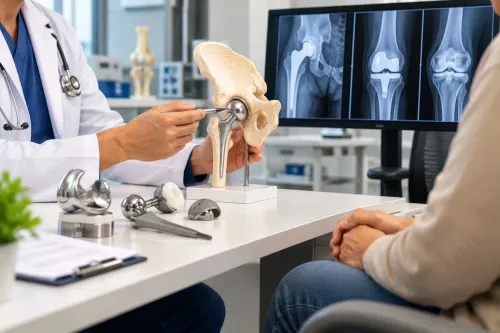
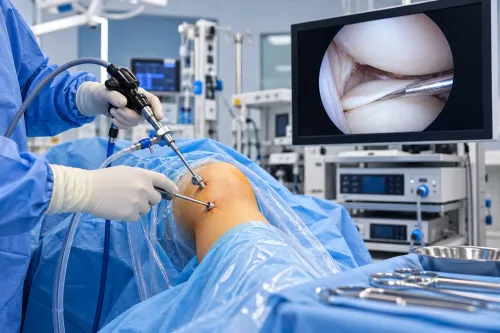
3. The clinician reviews X-rays, MRI scans, ultrasound images, scan reports and operation notes. These findings help distinguish a muscle strain from a ligament sprain, tendon injury, fracture or cartilage injury before exercises are selected.
4. Stop routine rehabilitation and seek prompt reassessment for suspected fracture, dislocation, complete tendon rupture, major instability, fever, neurovascular symptoms or inability to bear weight. Continuing to load a serious injury can worsen tissue damage or delay treatment.
5. Bring scan reports, medication details, footwear, operation documents and a record of recent training volume. Accurate information prevents a copied exercise plan from replacing diagnosis and helps the clinician set safe, measurable goals.
How do protection and mobility restore safe movement?
Early protection supports safe movement; it does not automatically mean complete rest. Depending on the diagnosis, your plan may include:
- Relative rest and temporary activity modification
- Compression and elevation to manage swelling
- Ice when prescribed
- A brace or tape for support
- Protected weight-bearing with crutches or another aid
Prolonged immobilisation can increase stiffness, muscle loss and reduced function. Once protection is in place, the clinician introduces controlled movement to restore joint range of motion while monitoring pain, swelling and loading tolerance.
A strain or sprain usually follows a non-operative progression. ACL reconstruction, tendon repair, fracture fixation and meniscal repair follow the surgeon’s restrictions instead. After ACL reconstruction, early priorities include controlling swelling, regaining full knee extension, activating the quadriceps and normalising your gait.
Bending the knee well does not compensate for a missing final few degrees of extension.
Meniscal repair is not treated like partial meniscectomy. Repair can restrict knee flexion, weight-bearing or hamstring loading to protect the repaired tissue, while partial meniscectomy often allows faster progression. The operative findings determine the programme.
These sports injury rehab steps Worli readers should expect are criteria-based, not tied to a fixed calendar. Pain, swelling, movement quality and loading response decide when activity advances. Pain that rises sharply, swelling that worsens or a loss of control signals the need to reduce the dose and seek review.
What happens during a rehabilitation session, and when does the workload change?
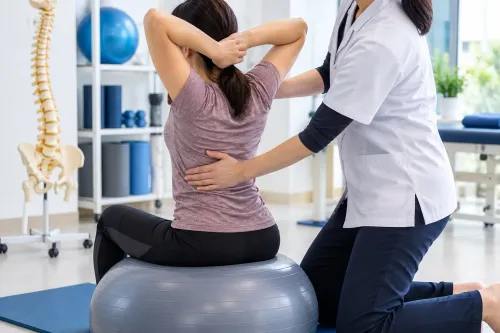
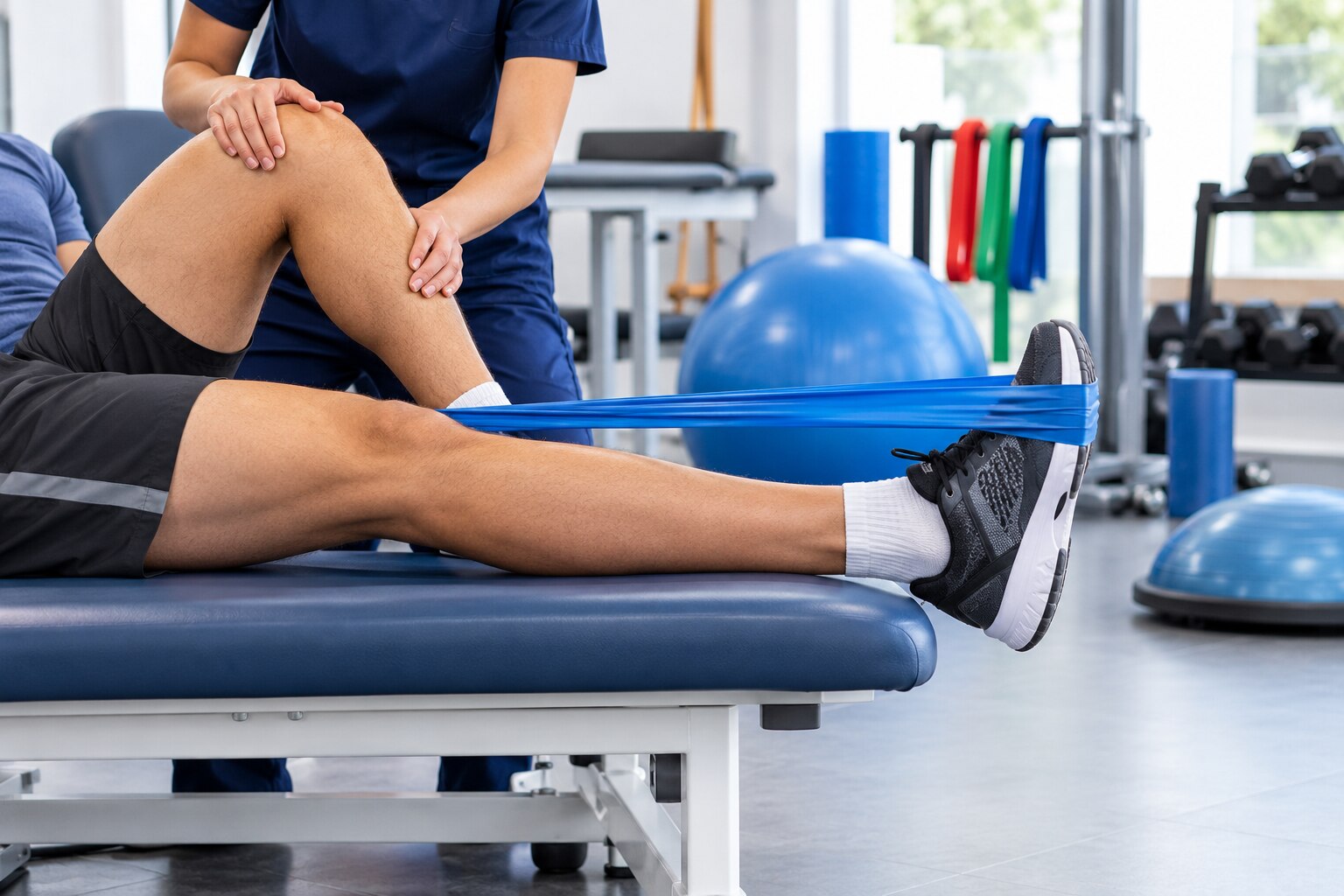
A rehabilitation session usually starts with a symptom check and warm-up, then moves through supervised mobility or activation, resistance and control exercises, technique correction, reassessment and home-exercise instructions. The clinician records pain, swelling, range of motion, strength and movement quality so progress does not depend on pain relief alone.
| Progress the exercise when | Pause or reduce the exercise when |
|---|---|
| Pain and swelling stay controlled, range of motion improves, strength is sufficient and movement remains consistent | Pain rises sharply, swelling increases later that day or the next morning, compensation appears or the target movement loses control |
| The current dose is tolerated during and after training | The recent dose exceeds capacity; reduce volume, intensity, range or recovery demand |
| Technique remains controlled under the planned load | Fatigue changes alignment, balance or joint control |
Pain relief does not prove that tissue is ready for sport. Attendance, home exercises, sleep, recovery time and load management all influence progress. Supervised sports rehabilitation sessions Worli add diagnosis, objective measurement and real-time correction that rest alone, a copied team-mate programme or an unsupervised gym routine cannot provide.
Ask which milestone controls progression, which symptoms require a dose reduction and how the home programme will be updated.
How are strength, balance and sport-specific movement rebuilt?
Once basic motion and muscle activation improve, rehabilitation adds progressive resistance, single-leg control, balance, proprioception and movement-quality work. The aim is not simply to lift more; it is to control the limb repeatedly without pain, swelling or compensations.
Clinicians can measure strength with dynamometry or isokinetic testing, observe repeated single-leg tasks and use hop tests. They check knee or ankle alignment, trunk control, landing mechanics and changes caused by fatigue. Side-to-side symmetry helps track progress, but it does not prove the uninjured side is fully normal.
| Sport | Main demand | Examples of late-stage work |
|---|---|---|
| Running | Impact and pace tolerance | Acceleration, sustained running and repeated efforts |
| Jumping | Take-off and landing control | Hops, jumps and controlled landings |
| Throwing | Shoulder and trunk loading | Progressive throws, rotation and reactive drills |
| Football and pivoting sports | Braking and direction changes | Deceleration, cutting, agility and unplanned movement |
Late-stage training adds acceleration, deceleration, cutting, agility, jumping, landing, reactive drills and repeated efforts. Straight-line jogging is only one milestone. If you can jog but cannot brake, change direction or maintain technique under fatigue, you have not completed sport preparation. Progression follows objective findings and the demands of your sport, not a fixed calendar.
How do you move from daily activity to training and competition?
Return to sport is a graded exposure, not a single clearance date. First confirm that daily activity is comfortable and controlled sport drills do not provoke symptoms; pain-free walking alone does not prove readiness for competition.
| Stage | What you do | Progress when |
|---|---|---|
| Individual work | Run, jump, throw, pivot or change direction in planned drills | Movement remains controlled without increased pain or swelling |
| Non-contact practice | Join technical and tactical sessions without collisions | You tolerate the session and the following 24 hours |
| Controlled contact or competition-like drills | Add contact, fatigue, reactive decisions and match-speed demands | Strength, confidence and movement quality remain consistent |
| Full training | Complete normal team workload | No next-day reaction and sport-specific tasks stay reliable |
| Competition | Return through an agreed workload, not unrestricted minutes immediately | Continue monitoring after each match |
Track pain, swelling, confidence, strength, movement quality and the response during the next 24 hours. Recurrent swelling, giving way, locking, worsening pain, numbness, fever or a new injury requires reassessment.
The plan must match the sport’s demands: contact, running, jumping, throwing and pivoting each expose different weaknesses. Continue strength, balance and neuromuscular conditioning after the first match.
When comparing orthopaedic sports injury recovery Worli options, ask who performs the assessment, which objective milestones are recorded, how surgeon restrictions are shared after ACL reconstruction, arthroscopy or reconstructive surgery, and what follow-up covers. Shiva Orthopaedic Centre can be compared with other providers using these practical criteria, not location or symptom relief alone.
Related service
Sports Injury Rehabilitation Sports Injury Rehabilitation in Worli – Dr. Kumar Dussa Dr. Kumar Dussa at Shiv Orthopaedic Centre, Worli, offers specialized Sports Injury... View service → |
Frequently asked questions
What happens at the first sports injury rehabilitation assessment?
The clinician reviews how the injury occurred, checks pain, swelling, movement, strength and stability, and decides whether rehabilitation is suitable or urgent medical assessment is needed.
How do protection and mobility restore safe movement?
Protection limits activities that worsen the injury, while guided mobility exercises preserve or restore movement without exceeding the tissue’s tolerance.
What happens during a sports rehabilitation session?
A session can include movement checks, hands-on treatment, mobility drills, strengthening, balance work and a review of your home exercises. Workload changes when your symptoms, control and performance support progression.
How are strength, balance and sport-specific movement rebuilt?
Rehabilitation progresses from controlled strength exercises to single-leg control, balance challenges, jumping, changes of direction and movements that match your sport.
How do you move from daily activity to training and competition?
You increase activity in stages, first tolerating daily tasks, then completing sport-specific drills and full training before returning to competition.
Keywords