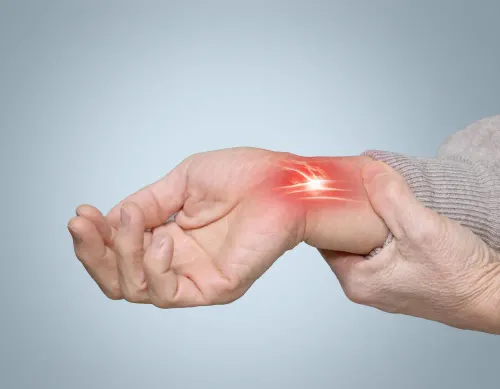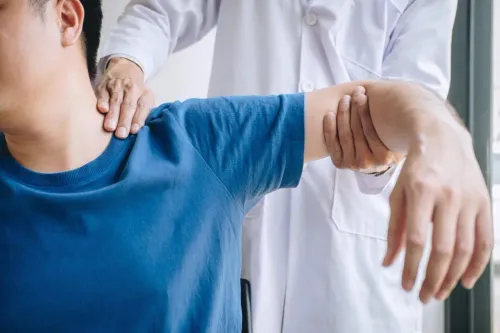
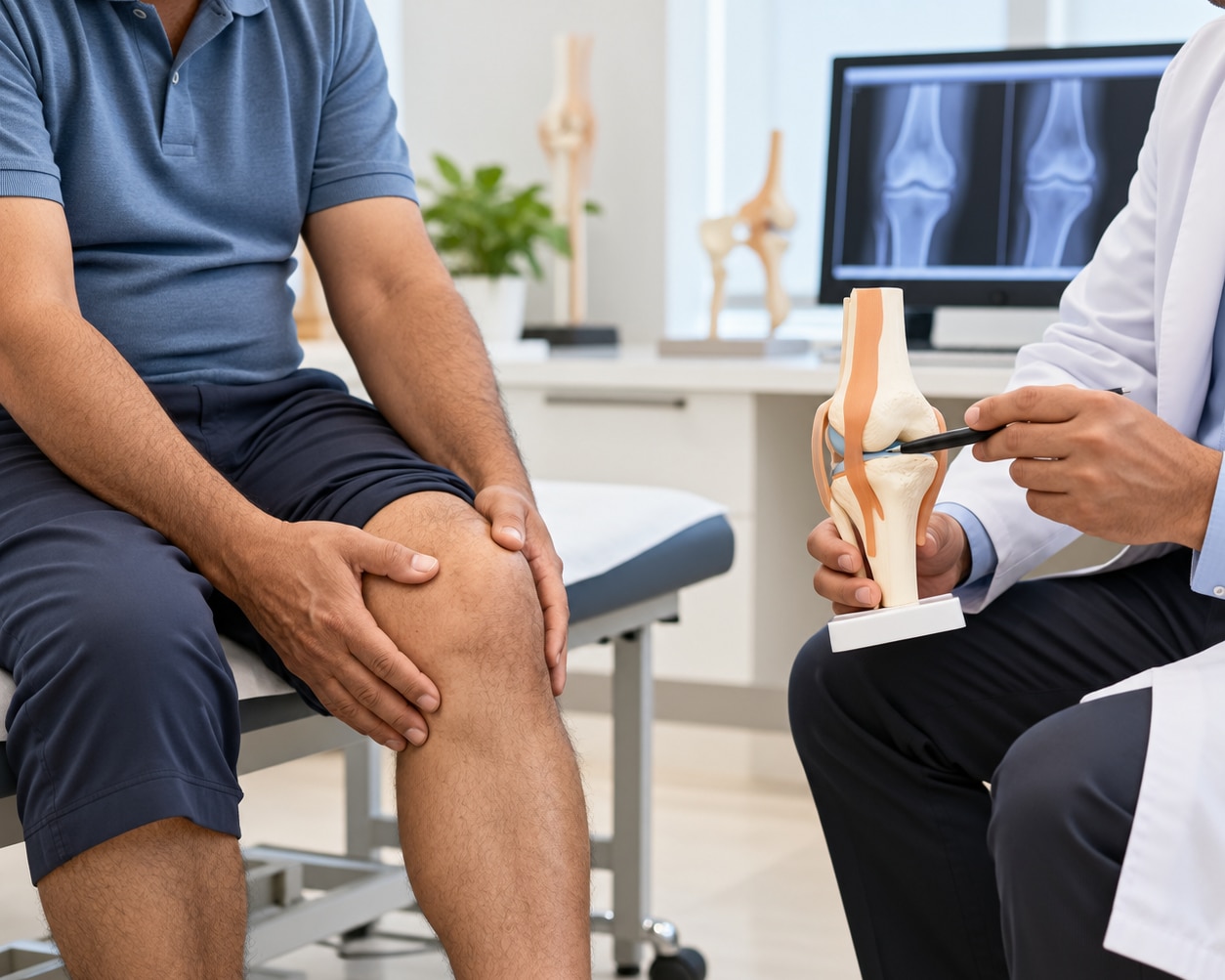
Aching after a long commute, a swollen knee after sport, or a stiff hip on the stairs can point to very different problems. By matching your symptom pattern, likely cause, daily demands, and response to first-line care, you can identify when self-management is reasonable and when specialist assessment is the safer next step.
Key takeaways
- Sudden severe pain, deformity, fever, or a hot swollen joint needs urgent medical assessment.
- Brief stiffness after rest points toward osteoarthritis; prolonged morning stiffness needs evaluation for inflammation.
- Start with diagnosis-led exercise, weight management, pain relief, or physiotherapy when appropriate.
- Consider specialist review when pain limits sleep, work, walking, or daily activities despite treatment.
What does your pain pattern suggest, and when is it urgent?
A dull ache that worsens with activity, plus brief stiffness after rest, often fits osteoarthritis, but it does not prove that diagnosis. Prolonged morning stiffness, several swollen joints, or symptoms on both sides need assessment for inflammatory arthritis.
Sharp pain after a twist, swelling after injury, instability, clicking, or giving way can involve a ligament, cartilage, tendon, or bursa.
Locking, reduced movement, or inability to straighten a knee changes the decision from routine monitoring to prompt review. Seek urgent assessment if you have:
- A hot, swollen, very painful joint with fever, chills, or feeling unwell
- Sudden inability to bear weight
- A visible deformity or severe injury
- New numbness or weakness
- A locked joint
Septic arthritis can damage a joint quickly and is not routine wear-and-tear pain. Book a joint pain doctor worli if symptoms last beyond two to four weeks, recur, disturb sleep, restrict work or self-care, or fail to improve after sensible activity changes.
Arrange faster assessment after a significant injury or when instability and mechanical symptoms appear. A painful joint is a symptom, not a diagnosis; examination determines whether you need routine rehabilitation, medication review, or specialist care.
How does the likely cause change the tests and treatment choice?
The joint’s location does not identify the cause. Osteoarthritis often brings activity-related aching and joint-space loss; inflammatory arthritis causes prolonged morning stiffness and swelling; gout causes sudden severe pain from crystals. Bursitis and tendon problems need load reduction and rehabilitation, while ligament injury or cartilage damage may require bracing, targeted physiotherapy, or surgery.
A hot, swollen joint with fever needs urgent assessment for infection.
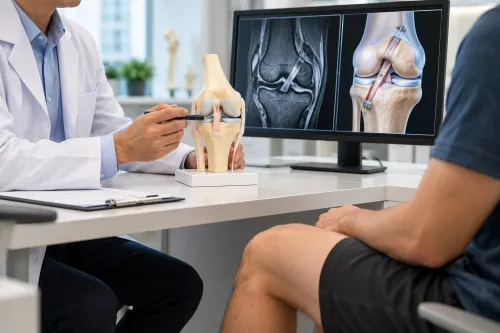
Assessment starts with when pain began, an injury, morning stiffness, fever, medicines, and limits on walking, work, sleep, or self-care. Examination checks movement, strength, alignment, swelling, tenderness, and stability. X-rays show bone alignment, joint-space loss, fracture, or arthritis; ultrasound detects fluid, bursae, and some tendon problems.
MRI shows cartilage, ligaments, menisci, bone marrow, and other soft tissue. Blood tests assess inflammation, autoimmune disease, or uric acid, while joint-fluid testing identifies crystals, infection, or inflammation.
Low-back, buttock, or leg pain with tingling, numbness, or weakness may come from spinal nerves rather than hip disease. For uncomplicated low-back pain, maintain normal activity and use exercise-based rehabilitation; request imaging only when the result could change management. Imaging is not automatically needed for typical osteoarthritis symptoms.
Joint pain treatment choices Worli should therefore follow the suspected cause, not the body part or search term; a joint pain specialist near Worli can help match tests and treatment.
Which non-surgical treatment should you try first?
Start with therapeutic exercise for osteoarthritis: strengthen the affected muscles two to three times weekly, add walking or cycling, and use movement work prescribed for your condition. A temporary increase in discomfort does not prove joint damage; sharp escalation, swelling, or symptoms that persist after exercise warrant review.
| Option | What it can do | What it cannot do |
|---|---|---|
| Physiotherapy and home exercises | Build strength, movement, balance, and confidence | Work as a one-off visit without regular practice |
| Pacing, sleep support, and activity changes | Reduce flare-ups while preserving useful activity | Replace rehabilitation indefinitely |
| Weight loss | Improve pain and function; any sustained loss helps, with around 10% more likely to help than 5% | Act as a quick fix |
| Topical NSAID for knee osteoarthritis | Reduce local pain before or instead of oral NSAIDs | Suit every joint or remove the underlying disease |
| Oral NSAID | Provide broader short-term pain relief | Be safe without reviewing stomach, kidney, liver, heart, blood-pressure, and medicine risks; use the lowest effective dose for the shortest duration |
| Brace | Help selected instability or load-related pain | Replace strengthening |
| Corticosteroid injection | Offer roughly two to ten weeks of relief when other options are unsuitable or insufficient | Permanently correct osteoarthritis |
| Hyaluronic acid, platelet-rich plasma, or stem-cell injections | Offer a proposed treatment to discuss critically | Count as established cures; evidence and preparation methods vary |
Ask what outcome and evidence support any injection recommendation. If you are comparing joint pain treatment options in Worli, choose a plan you can repeat and measure against walking, sleep, stairs, or work.
How should your daily routine influence the treatment decision?
Your routine can change the best treatment choice as much as the scan. Ask whether you sit at a desk, commute by train or car, climb stairs, squat, kneel, lift a child, drive, play sport, or need a rapid return to activity.
A desk worker may manage gradual strengthening with movement breaks. Someone climbing several flights daily may need temporary pacing, a rail, a walking aid, or a different work arrangement. A treatment fails in practice if you cannot fit it around work, childcare, travel, or sleep.
| Option | Time and disruption | Best fit |
|---|---|---|
| Home exercise | Regular sessions each week | A routine you can perform consistently |
| Physiotherapy | Several visits plus daily practice | Guidance, movement retraining, or supervised progression |
| Injection | Brief relief with little exercise time saved | A short-term bridge when other care is unsuitable |
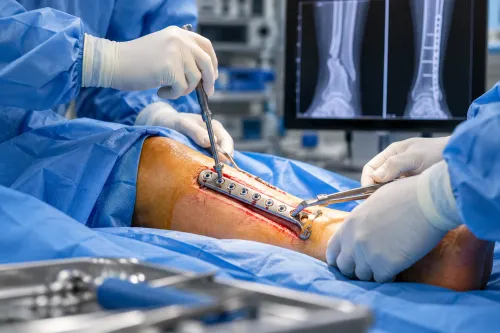
| Surgery | Operation, restrictions, rehabilitation, and possible time away from work or driving | Persistent disability after suitable non-surgical care |
Weight-management work requires sustained planning. Medicines require adherence and safety reviews, while follow-up checks show whether the plan is improving walking, sleep, stairs, work, or sport.
Do not escalate because symptoms remain after a few days. Persistent symptoms despite a properly followed plan support reassessment. If you are comparing joint pain treatment choices Worli, choose care you can measure against daily goals, not simply the quickest-sounding option.
When should you see a specialist or consider surgery?
Persistent pain after a properly followed rehabilitation plan, or pain that limits walking, work, sleep or self-care, warrants specialist review. Choose the clinician for the suspected cause: an orthopaedic surgeon assesses structural injury and surgical options, a rheumatologist evaluates inflammatory or autoimmune disease, and a physiotherapist delivers movement rehabilitation.
A “joint pain doctor Worli” search alone cannot make that choice. Shiva Orthopaedic Centre can provide a local setting to discuss diagnosis, alternatives, surgical suitability and rehabilitation demands.
Referral is justified for:
- Recurrent swelling or instability
- Mechanical locking or loss of movement
- A major injury or confirmed ligament tear
- Symptoms that persist despite suitable non-surgical care
- Disability that affects walking, work, sleep or self-care
Compare each procedure with continued rehabilitation, not just with your latest X-ray.
| Option | When it applies | Main trade-off |
|---|---|---|
| Arthroscopy | Locked joint or repairable traumatic injury | Lavage or debridement does not treat uncomplicated osteoarthritis; keyhole surgery is not automatically lower risk |
| Ligament reconstruction | Confirmed tear, instability and a clear activity goal | Operation and rehabilitation versus bracing and strengthening |
| Partial replacement | Damage confined to one knee compartment | Preserves more of the joint, but later disease can require further surgery |
| Total replacement | Advanced disease with substantial disability after non-surgical care fails or is unsuitable | Pain and function gains versus infection, blood clots, stiffness, persistent pain, dislocation in some joints, revision surgery and lengthy rehabilitation |
If you are comparing a joint pain specialist near Worli, ask what finding supports the procedure and what happens if you continue rehabilitation.
Related services
Join Pain Management Joint Pain Management in Worli – Dr. Kumar Dussa Dr. Kumar Dussa at Shiv Orthopaedic Centre, Worli, provides expert Joint Pain Management for... View service → |
Joint Replacement Surgery Joint Replacement Surgery in Worli – Dr. Kumar Dussa Dr. Kumar Dussa at Shiv Orthopaedic Centre, Worli, specializes in Joint Replacement Surgery for... View service → |
Frequently asked questions
What does my joint pain pattern suggest?
A dull ache that worsens with activity and brief stiffness after rest often fits osteoarthritis. Prolonged morning stiffness, several swollen joints, or symptoms on both sides need assessment for inflammatory arthritis. Sudden severe pain, deformity, fever, or a hot swollen joint requires urgent medical attention.
How does the likely cause change testing and treatment?
A clinician may use your history and examination first, then order an X-ray for suspected osteoarthritis or injury. Blood tests and sometimes ultrasound, MRI, or joint-fluid testing help assess inflammatory arthritis, infection, tendon problems, or internal joint damage. Treatment should match the confirmed or most likely cause.
Which non-surgical treatment should I try first?
Depending on the diagnosis, first-line care may include targeted physiotherapy, strengthening and flexibility exercises, activity modification, weight management, heat or ice, and prescribed or pharmacist-advised pain relief. Do not exercise through sudden severe pain or a hot, swollen joint.
How should my daily routine influence treatment choices?
Choose a plan you can follow around work, commuting, sleep, exercise, and caregiving. A physiotherapy programme may suit someone who can attend regular sessions, while a home exercise plan may fit a busy schedule. Tell your clinician which movements, tasks, and times of day trigger pain.
When should I see a joint pain specialist or consider surgery?
Arrange specialist assessment when pain persists despite appropriate non-surgical care, restricts sleep or daily activities, or follows a significant injury. Surgery becomes a consideration when imaging and examination show structural damage and pain or loss of function remains substantial after conservative treatment.
Related services
Partial Knee Replacement Dr. Kumar Dussa at Shiv Orthopaedic Centre, Worli, offers advanced Partial Knee Replacement surgery for patients with arthritis or damage limited to... View service → |
Arthroscopic Surgery Arthroscopic Surgery in Worli – Dr. Kumar Dussa Dr. Kumar Dussa at Shiv Orthopaedic Centre, Worli, specializes in Arthroscopic Surgery, a minimally... View service → |
Sports Injury Rehabilitation Sports Injury Rehabilitation in Worli – Dr. Kumar Dussa Dr. Kumar Dussa at Shiv Orthopaedic Centre, Worli, offers specialized Sports Injury... View service → |
Total Knee Replacement Total Knee Replacement in Worli – Dr. Kumar Dussa Dr. Kumar Dussa at Shiv Orthopaedic Centre, Worli, specializes in Total Knee Replacement surgery... View service → |
Keywords