Severe joint damage is confirmed by more than an X-ray: pain, stiffness, deformity, examination findings, and loss of everyday function all shape the decision. You will learn how surgeons compare replacement with joint-preserving options, what the operation changes mechanically, and how structured rehabilitation supports safer progress after surgery.
Key takeaways
- Use weight-bearing X-rays to assess joint-space loss, osteophytes, deformity, and bone-on-bone contact.
- Compare replacement with joint-preserving treatment and continued non-surgical care before deciding.
- Expect staged mobility gains through walking practice, exercises, wound care, and activity progression.
- Confirm surgeon expertise, implant details, rehabilitation access, costs, and follow-up arrangements in Worli.
Which findings show that joint damage is severe enough to consider replacement?
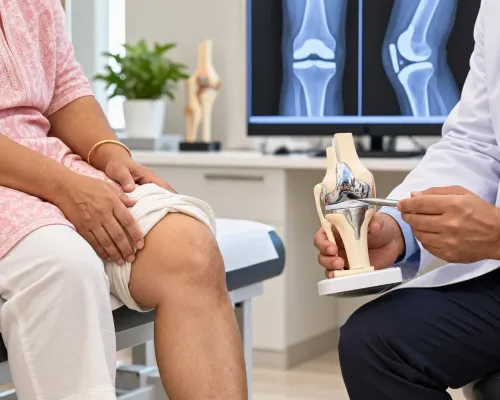
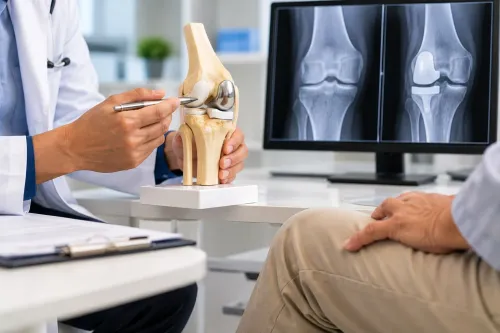
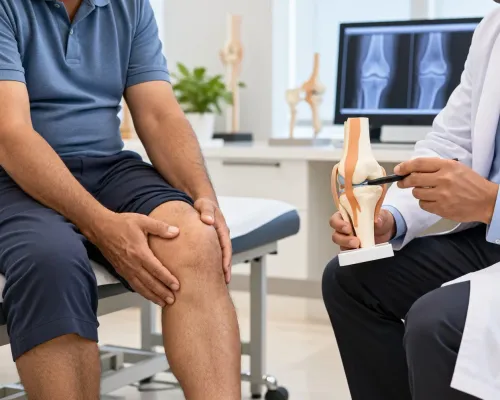
Replacement becomes worth discussing when imaging shows advanced damage and your symptoms make ordinary life difficult despite non-surgical care. Weight-bearing X-rays are especially useful because standing loads expose narrowed joint space, osteophytes, deformity, and bone-on-bone contact that a non-weight-bearing image can understate.
| Finding | What it shows | Why it matters |
|---|---|---|
| Joint-space loss or bone-on-bone contact | Cartilage has worn away between joint surfaces | Supports advanced wear when pain and functional loss match |
| Osteophytes and deformity | Extra bone and altered joint shape | Helps explain stiffness, changed alignment, and abnormal loading |
| MRI changes | Cartilage defects, bone damage, tendon tears, or other soft-tissue injury | Adds detail when X-rays do not explain symptoms or another diagnosis is suspected |
| Examination findings | Restricted movement, instability, weakness, or alignment changes | Shows how damage affects usable movement, not just images |
The case becomes stronger when pain persists, interrupts sleep, shortens your walking distance, or makes stairs, standing, or work difficult. It also matters that exercise therapy, weight management, medicines, injections, or a walking aid has failed to provide adequate relief.
An abnormal X-ray alone does not decide treatment. Assess functional limitation, general health, expectations, and response to non-surgical care together to judge whether joint replacement benefits for severe joint damage in Worli are worth discussing now. MRI is not routine for every arthritic joint.
How do surgeons choose between replacement, preservation, and continued non-surgical care?
A replacement is not automatically the next step after severe X-ray damage. Surgeons match the treatment to pain, function, alignment, ligament stability, bone quality, activity goals, and the rehabilitation effort you can manage.
| Option | What it means | When it applies |
|---|---|---|
| Continued non-surgical care | Medicines, injections, weight management, physiotherapy, and walking aids | Pain remains manageable and daily function is still acceptable |
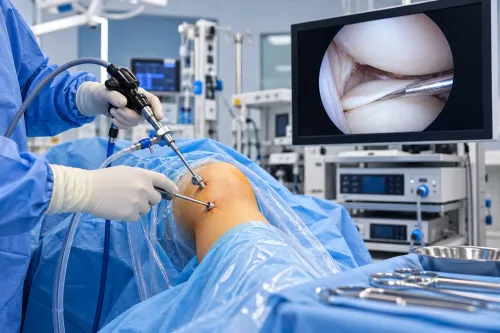
| Arthroscopy | A camera-assisted procedure to treat selected cartilage, loose-body, or soft-tissue problems | A specific repairable problem exists; it rarely solves advanced bone-on-bone arthritis |
| Joint-preserving surgery | Realignment or cartilage-preserving treatment that shifts load away from damaged tissue | Damage is limited, bone and ligaments are suitable, and the joint has useful remaining function |
| Partial knee replacement | Replaces one damaged knee compartment while retaining the other compartments, more natural bone, and functioning ligaments | Arthritis is confined to one compartment with stable ligaments, suitable alignment, and adequate bone |
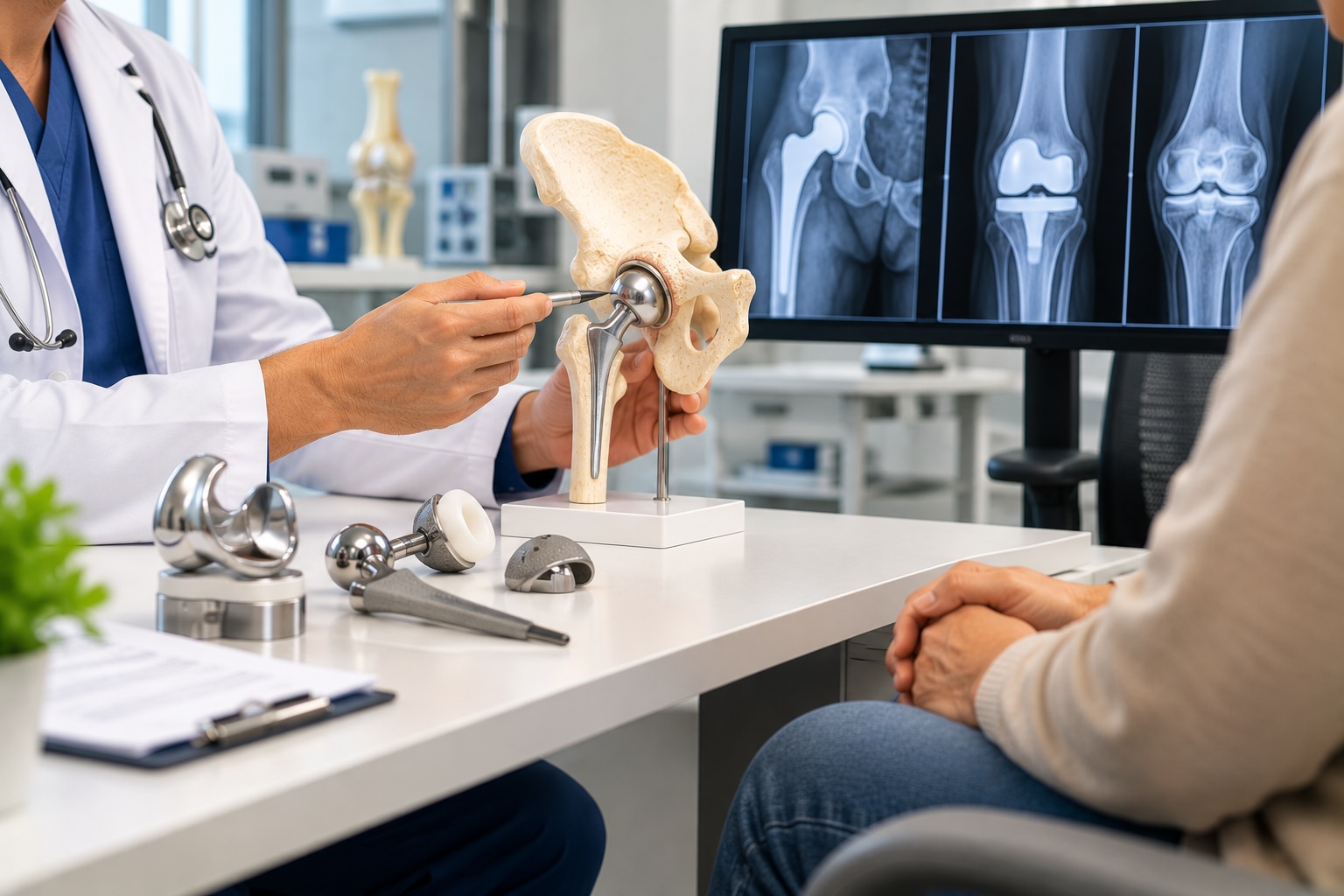
| Total knee replacement | Replaces worn femoral and tibial bearing surfaces with metal components and a medical-grade plastic spacer | Multiple compartments are damaged and pain or disability persists despite appropriate non-surgical care |
Partial replacement becomes a poor choice when damage affects several compartments, inflammatory disease is present, deformity is major, ligaments are insufficient, or bone cannot securely support the components. Total replacement also does not replace every ligament or structure in the knee.
The practical question is whether a smaller operation can preserve useful tissue without leaving untreated pain. A search for joint replacement for damaged joints worli should lead to an assessment of these trade-offs, not a decision based on an X-ray alone.
Recovery demands, including strengthening, walking practice, and follow-up rehabilitation, belong in the decision before surgery.
What does replacement surgery change, and which mobility gains are realistic?
Replacement surgery removes damaged cartilage and a measured amount of bone, corrects alignment, and inserts metal components with medical-grade plastic bearing surfaces. These parts create a smoother, more stable joint, but they do not recreate a normal biological joint or replace every ligament, muscle, and sensation.
| Joint | Main mobility goal | Rehabilitation priority |
|---|---|---|
| Knee | Less pain, steadier walking, easier stairs, and useful bending | Quadriceps strength, knee extension, flexion, balance, and safe gait |
| Hip | Pain-free walking, improved transfers, endurance, and independence | Hip strength, balance, walking confidence, and precautions against dislocation |
| Shoulder | Reaching, dressing, washing, and usable arm elevation | Protected movement, shoulder control, then gradual strength |
Measure progress through practical changes: longer walking distance, better sleep, easier stair use, improved range of motion, driving, work, and less help with daily tasks. Early walking does not mean recovery is complete; strength, balance, and confidence can keep improving for months, especially after prolonged weakness.
Residual stiffness, numbness around the incision, and activity limits remain possible. Kneeling can stay uncomfortable after knee replacement, and repetitive running or jumping places more load on an implant than walking, cycling, swimming, or golf. Advice must match the implant, fixation, bone quality, balance, and skill.
Structured rehabilitation—not the implant alone—drives joint replacement mobility benefits worli patients seek when researching “joint replacement mobility benefits worli”.
What happens during recovery from discharge through returning to activity?
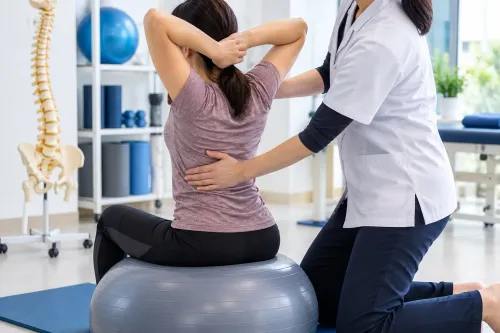
Recovery starts before admission: prehabilitation builds quadriceps or hip strength and aerobic tolerance, making transfers and early walking easier. Joint replacement recovery support in Worli should then coordinate discharge, transport, physiotherapy, and home help rather than promise a fixed finish date.
Your discharge plan should cover:
- Safe bed, chair, and toilet transfers, with a walker or cane fitted to you.
- Wound care, prescribed pain control, and thrombosis-prevention medicine when ordered.
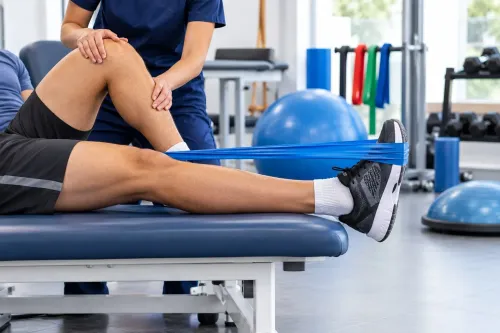
- Range-of-motion exercises followed by progressive muscle strengthening.
- Physiotherapy, fall prevention, and follow-up review dates.
- Stairs, loose rugs, bathroom hazards, transport, and sleeping arrangements.
- Extra support if you live alone or have no available caregiver.
| Milestone | What often happens | Why timing differs |
|---|---|---|
| Basic household activity | Resumes within weeks | Joint replaced, pain, swelling, and safe use of an aid |
| Driving and work | Progress after mobility and reaction control return | Side operated on, job demands, medicines, and transport |
| Stairs, strength, balance, and endurance | Improve over weeks to months | Preoperative strength, age, diabetes, nutrition, and adherence |
| Sport or unrestricted loading | Considered after functional recovery | Surgical technique, complications, implant, and surgeon’s precautions |
Do not treat the table as a guarantee. Increasing redness or drainage, fever, escalating pain, calf swelling or tenderness, sudden shortness of breath, chest pain, or sudden inability to bear weight needs prompt medical assessment. Strength and confidence can continue improving for months, particularly after complications or a period of severe inactivity.
What should you confirm before choosing a joint replacement pathway in Worli?
Before choosing joint replacement for damaged joints in Worli, make the consultation answer two questions: is surgery appropriate now, and what support will get you safely back to daily life?
- Bring weight-bearing X-rays, MRI reports, discharge summaries, and a complete medication and medical history, including previous operations.
- Report dental, skin, urinary, or other infections before elective surgery; an untreated infection can disrupt the operation plan.
- Discuss diabetes control, anaemia, obesity, smoking, nutrition, skin disease, and any condition that could complicate healing.
- Ask which joint surfaces and ligaments will be retained, which implant type is planned, and why that choice fits your alignment, bone quality, and activity goals.
- Confirm the walking aid, thrombosis-prevention medicine, wound-care plan, physiotherapy access, follow-up schedule, and arrangements if you live alone or have stairs.
- Get written guidance on driving, work, lifting, kneeling, running, jumping, and other activity boundaries.
| Pathway | What is changed | Key question |
|---|---|---|
| Non-surgical care | Nothing is replaced | Can pain control, physiotherapy, injections, or an aid still meet your goals? |
| Partial replacement | One damaged compartment is replaced; suitable bone and ligaments remain | Is disease confined to one compartment with stable ligaments? |
| Total replacement | More bearing surfaces are replaced; not every ligament or structure | Does widespread damage or deformity require broader reconstruction? |
Joint replacement recovery support in Worli should include transport, home-safety planning, and progressive rehabilitation. Loosening, wear, dislocation, fracture, infection, and revision surgery remain possible; lifetime revision probability reflects age and loading, not a guaranteed implant lifespan. Shiva Orthopaedic Centre can discuss diagnosis, surgical planning, and rehabilitation arrangements together.
Related services
Joint Replacement Surgery Joint Replacement Surgery in Worli – Dr. Kumar Dussa Dr. Kumar Dussa at Shiv Orthopaedic Centre, Worli, specializes in Joint Replacement Surgery for... View service → |
Partial Knee Replacement Dr. Kumar Dussa at Shiv Orthopaedic Centre, Worli, offers advanced Partial Knee Replacement surgery for patients with arthritis or damage limited to... View service → |
Frequently asked questions
Which findings show that joint damage is severe enough to consider replacement?
Severe damage is suggested by advanced joint-space narrowing, osteophytes, deformity, bone-on-bone contact, and persistent pain or functional limitation despite appropriate non-surgical treatment. Weight-bearing X-rays can reveal load-related changes that non-weight-bearing images understate.
How do surgeons choose between replacement, preservation, and continued non-surgical care?
The decision considers pain severity, imaging findings, age, activity goals, joint stability, alignment, bone quality, previous treatment, and overall health. Preservation suits selected joints with repairable damage, while non-surgical care remains reasonable when symptoms and function are manageable.
What mobility gains are realistic after joint replacement?
Replacement can reduce joint pain and improve walking, standing, stair use, and daily activities. It does not restore a damaged joint to its original condition, and gains depend on muscle strength, balance, rehabilitation, general health, and the joint replaced.
What happens during recovery after discharge?
Recovery usually includes wound monitoring, pain control, prescribed exercises, walking practice, and follow-up reviews. You progress from supported walking to greater independence, then resume specific activities when strength, movement, healing, and the surgical team’s guidance allow.
What should you confirm before choosing a joint replacement pathway in Worli?
Confirm the diagnosis, alternatives, implant plan, surgeon’s experience with the procedure, hospital arrangements, expected rehabilitation, warning signs, follow-up schedule, total costs, and the support available at home.
Related service
Total Knee Replacement Total Knee Replacement in Worli – Dr. Kumar Dussa Dr. Kumar Dussa at Shiv Orthopaedic Centre, Worli, specializes in Total Knee Replacement surgery... View service → |
Keywords