
Knee pain becomes a work problem when it changes what you can do: standing through a shift, climbing stairs, driving, kneeling, lifting, or moving between a desk and the floor. By the end, you will know which symptoms warrant assessment, when total knee replacement is considered, what alternatives remain, and how recovery affects a return to work.
Key takeaways
- Pain that causes missed shifts or avoided duties needs an orthopaedic assessment.
- X-rays showing advanced joint damage support, but do not alone decide, knee replacement.
- Compare injections, physiotherapy and surgery against your job’s physical demands.
- Plan modified duties and a staged return before scheduling total knee replacement.
When has knee pain become a work-limiting problem?
Pain has become work-limiting when your knee prevents you from completing ordinary job duties reliably, not merely when it hurts after a long day. Repeated absences, shortened shifts, slower movement, or avoiding tasks because of pain all deserve attention.
Signs include:
- Missing shifts or leaving work early because of knee pain or swelling.
- Walking shorter distances before needing to sit, rest, or change direction.
- Struggling to stand through a shift or climb workplace stairs.
- Limping, favouring one leg, or developing an altered gait.
- Unable to kneel, lift from a low position, or move between standing and the floor.
- Difficulty driving, operating pedals, or turning safely while seated.
- Trouble with desk-to-floor tasks, such as retrieving files, stock, tools, or equipment.
Persistent symptoms deserve an orthopaedic assessment when they continue despite sensible activity changes, basic exercise, or prescribed treatment. Pain at night, progressive stiffness, swelling, or loss of movement strengthens the case for evaluation, but does not prove that surgery is needed.
For someone searching knee replacement for working adults in Worli, the first decision is whether the knee is truly causing the work problem. Hip disease, back-related nerve pain, instability, inflammation, or another condition can feel like knee pain.
An assessment can identify the source and compare non-surgical treatment with surgery rather than treating every painful knee with replacement.
Which symptoms and test results support considering total knee replacement?
Persistent pain supports considering total knee replacement when it continues despite a serious trial of exercise, weight management, safe medicines, injections, bracing, or activity changes. Pain that wakes you, occurs at rest, or limits walking and stairs strengthens the case, especially with progressive bow-legged or knock-kneed deformity and severe loss of knee movement.
For total knee replacement indications, Worli readers should look for a pattern rather than one alarming result:
- Pain remains work-limiting after appropriate non-surgical treatment.
- Night or resting pain persists.
- The leg’s alignment is progressively changing.
- Stiffness prevents meaningful bending or straightening.
- Walking, standing, stairs, or daily tasks remain restricted.
- Examination and weight-bearing X-rays show damage that matches the painful knee.
| Finding | Supports assessment | Does not prove surgery |
|---|---|---|
| Severe arthritis on a standing X-ray | Confirms structural damage for review | An X-ray alone is not an indication |
| Persistent knee pain | Justifies identifying the cause | Pain alone may come from the hip, spine, or another condition |
| Tolerable symptoms with preserved function | Supports monitoring and continued care | Does not justify accepting surgical risks |
The knee must be confirmed as the true pain source. Hip disease, lumbar nerve irritation, inflammatory arthritis, infection, instability, or pain sensitisation can produce knee-region symptoms that replacement will not correct. Surgery becomes a reasonable discussion when symptoms, examination, imaging, and failed treatment align—not simply because a scan looks severe.
How does an orthopaedic assessment determine whether surgery fits your job?
The decision depends on whether the knee is causing your work disability and whether replacement matches your job demands. Total knee replacement for working adults in Worli is considered after assessing symptoms, function, joint damage, health risks, and your goals—not from an X-ray alone.
1. Describe your work history: hours spent standing, walking, climbing, driving, kneeling, lifting, squatting, or moving from a desk to the floor. Report pain location and pattern, stiffness, swelling, night or rest pain, giving way, and how symptoms change during and after a shift.
2. Expect an examination of walking pattern, knee range of motion, tenderness, ligament stability, leg alignment, swelling, and muscle strength. Hip movement and the lumbar spine also need assessment because hip disease or lumbar nerve problems can refer pain to the knee.
3. Have standing, weight-bearing X-rays reviewed alongside your symptoms. The images show whether arthritis, deformity, or joint-space loss matches the painful area; severe-looking damage with tolerable symptoms does not automatically justify surgery.
4. Review exercise, weight management, medicines, injections, bracing, activity changes, and their results. Discuss smoking, diabetes control, obesity, anaemia, dental or skin infection, and other illnesses because they may require optimisation or a specific risk discussion.
Personal goals matter: returning to standing work differs from managing a desk job. Inflammatory arthritis, knee instability, infection, untreated hip disease, lumbar nerve pain, or pain sensitisation can make replacement the wrong treatment, even when the knee X-ray looks abnormal. Another diagnosis must be treated first.
What treatment choice best balances pain relief and time away from work?
A tolerable pain level with acceptable work function usually favours continued non-surgical care over an operation. The best choice depends on how much relief each option offers, how long recovery takes, and whether the knee damage matches the proposed treatment.
| Option | Likely role | Work-time trade-off |
|---|---|---|
| Continued care, physiotherapy, medicines | Exercise, weight management, activity changes, pain relief, and strengthening | Little or no absence, but symptoms may persist |
| Injections or bracing | Temporary symptom control or support during selected activities | Short recovery; relief varies and does not repair arthritis |
| Total knee replacement | Replaces the damaged joint when arthritis is widespread and disability is substantial | Longer rehabilitation; kneeling, impact, and heavy work may remain restricted |
| Partial knee replacement | Replaces one damaged compartment while preserving suitable healthy structures | Smaller operation for the right knee, but unsuitable if arthritis is widespread |
| Osteotomy | Realigns the leg to unload one worn compartment | Bone-healing time and a slower return to demanding work |
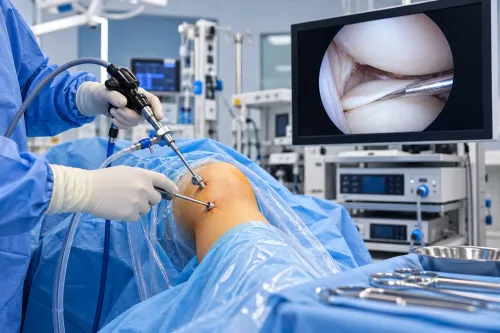
| Arthroscopy | Useful for selected mechanical problems, not routine wear-and-tear arthritis | Brief recovery, but little benefit when diffuse arthritis causes the pain |
Partial replacement deserves a serious comparison when disease is confined to one compartment, the ligaments remain functional, alignment is suitable, and there is no widespread arthritis. It is not simply a smaller total replacement.
For anyone researching knee replacement for persistent knee pain in Worli, surgery becomes harder to justify when symptoms remain tolerable. Younger adults also need a frank discussion about implant longevity: modern knee replacements often last 15–20 years or more, but a longer lifetime creates more opportunity for revision.
Shiva Orthopaedic Centre can use examination, standing X-rays, job demands, and personal goals to compare these options rather than treating every painful knee with replacement. Understanding total knee replacement indications in Worli means weighing function against surgical risk, not reading an X-ray alone.
Related service
Total Knee Replacement Total Knee Replacement in Worli – Dr. Kumar Dussa Dr. Kumar Dussa at Shiv Orthopaedic Centre, Worli, specializes in Total Knee Replacement surgery... View service → |
What should you plan for recovery and a staged return to work?
Before scheduling surgery, arrange transport, time away from work, help at home, physiotherapy access, and a staged return-to-work plan. Discuss anaesthesia, medical conditions, medicines, and the implant: a total knee replacement includes femoral and tibial components, with a patellar component when appropriate.
Hospital discharge depends on mobility, pain control, wound condition, and home safety, not a promised fixed stay.
Early rehabilitation focuses on:
- Reducing swelling and controlling pain
- Achieving full knee extension and useful flexion
- Rebuilding quadriceps strength
- Walking safely with a frame or crutches, then progressing beyond walking aids
- Learning wound care and recognising increasing redness, drainage, fever, or worsening pain
Return to work is measured in weeks, not days. Desk work is often easier to resume than prolonged standing, climbing, kneeling, squatting, lifting, driving, or heavy manual work. Plan shorter hours, seated breaks, reduced stairs, and restricted lifting before attempting full duties; your surgeon and physiotherapist can match progression to endurance, gait, and job demands.
People searching for knee replacement for working adults worli or knee replacement for persistent knee pain worli should expect stiffness and weakness to last beyond wound healing.
A replacement does not guarantee unlimited running, kneeling, squatting, or a completely normal knee; repeated impact and heavy work can remain unsuitable, so discuss lasting job modifications before surgery.
Frequently asked questions
When has knee pain become a work-limiting problem?
Knee pain is work-limiting when it causes repeated absences, shortened shifts, slower movement or avoidance of essential duties. Difficulty standing, walking, climbing stairs or lifting at your usual level also matters.
Which symptoms and test results support considering total knee replacement?
Persistent pain, stiffness, swelling, reduced movement and difficulty with walking or stairs support assessment. Weight-bearing knee X-rays showing advanced cartilage loss, joint-space narrowing, deformity or bone-on-bone change strengthen the case when symptoms remain disabling despite non-surgical treatment.
How does an orthopaedic assessment determine whether surgery fits your job?
The assessment compares your pain and examination findings with your job’s demands, including standing time, walking distance, stairs, kneeling, lifting, driving and safety-critical tasks. Your medical history, X-rays and response to physiotherapy, medicines or injections also influence the recommendation.
What should you plan for recovery and a staged return to work?
Plan transport, time away from work, physiotherapy and help with household tasks before surgery. A staged return can begin with shorter shifts or seated duties, then progress as swelling, strength, walking tolerance and workplace safety improve; heavy manual work usually requires more restriction than desk work.
Keywords