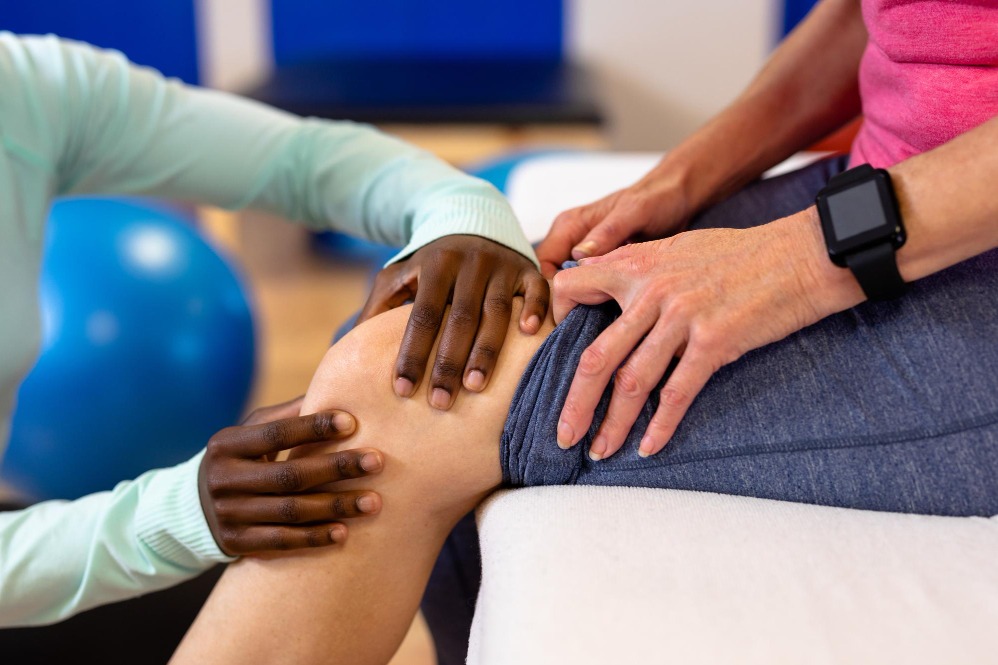
A sore muscle after an unfamiliar workout is very different from a ligament injury, tendon problem, or stress fracture. Yet many active people initially manage every sports-related pain in exactly the same way: rest for a few days and then return to training.
For athletes and fitness enthusiasts considering Sports Injury Treatment in Worli, one of the most useful skills is knowing when symptoms represent normal post-exercise soreness and when they deserve orthopedic assessment.
Normal Soreness Usually Behaves Differently
Muscle soreness commonly appears after strenuous or unfamiliar exercise. It may develop several hours after activity and gradually improve over the following days.
An injury is more likely when pain begins suddenly during a particular movement or is associated with swelling, instability, restricted movement, or inability to continue the activity.
Sports injuries commonly involve:
- Ligaments
- Tendons
- Muscles
- Cartilage
- Joints
- Bones
Knees, ankles, shoulders, wrists, and elbows are frequently affected depending on the sport or exercise.
Use Symptoms to Guide the Next Step
Mild discomfort that steadily improves with temporary activity modification may not always require extensive investigation.
However, an orthopedic evaluation becomes more important when there is:
- Significant swelling
- Persistent pain
- Joint instability
- Locking or catching
- Reduced range of motion
- Difficulty bearing weight
- Recurrent pain every time training resumes
- Weakness after an injury
An obvious deformity, severe trauma, or inability to use the affected limb should be assessed promptly.
Do Not Let Pain Relief Become the Return-to-Sport Test
A common mistake is returning to full training as soon as pain reduces.
Pain improvement is important, but readiness for sport may also depend on strength, mobility, balance, joint stability, and the ability to perform sport-specific movements safely.
For example, a runner may feel comfortable walking but still lack the capacity for repeated impact. A gym enthusiast with a shoulder injury may have little pain at rest but experience symptoms during overhead lifting.
Return should therefore be progressive rather than based on pain alone.
Why Recurrent Injuries Need Investigation
When the same ankle repeatedly twists or the same knee hurts every time running volume increases, the problem may involve more than bad luck.
Possible contributing factors can include:
- Incomplete rehabilitation
- Muscle weakness
- Poor movement control
- Training-load changes
- Reduced flexibility
- Previous ligament injury
- Technique-related stress
Identifying these factors can help create a more useful recovery strategy.
Imaging Is Not Required for Every Sports Injury
Orthopedic examination often provides important information about the injured structure.
X-rays may be useful when a fracture or bony injury is suspected. MRI or other imaging can be considered when the clinical findings suggest certain ligament, tendon, cartilage, or soft-tissue injuries.
The choice of investigation should be based on the injury rather than automatically ordering every available scan.
Treatment Should Match Both Injury and Activity Goals
The needs of a recreational walker differ from those of a competitive athlete or someone who performs heavy strength training.
Depending on the injury, treatment may include temporary activity modification, medication, physiotherapy, structured rehabilitation, bracing, or other interventions. Certain injuries may require surgical assessment.
Shiva Orthopaedic Centre provides orthopedic evaluation for sports and activity-related injuries in Mumbai. For people living, working, exercising, or training around Worli, timely assessment can help establish what has been injured and what needs to recover before full activity resumes.
A sensible sports-injury plan is not simply about getting back quickly. It is about returning with adequate movement, strength, stability, and confidence for the demands of the activity. That approach can be especially valuable for people whose symptoms repeatedly return every time they attempt to resume exercise.
Keywords