A complex fracture can damage bone, joints, skin, muscle, nerves, and blood vessels at the same time. Understanding the emergency steps, reconstruction options, surgical timing, and rehabilitation milestones helps you judge what recovery requires and which questions to ask your orthopaedic team.
Key takeaways
- Seek urgent care for open, crushed, infected, or circulation-threatening fractures.
- Staged surgery controls contamination before definitive bone and soft-tissue reconstruction.
- Surgeons restore length, alignment, joint surfaces, stability, and tissue coverage.
- Track walking, strength, movement, pain, sensation, and daily activities during recovery.
Which Bone Injuries Need Reconstruction, and What Should You Do First?
A fracture becomes complex when bone, joint, blood supply, or surrounding tissue cannot be restored by simple alignment and immobilisation. Reconstruction may be needed for an open, crushed, segmental, infected, malunited, nonunited, or articular-surface fracture, or when tendons, ligaments, nerves, vessels, or soft tissue are torn or missing.
| Injury pattern | Why it matters |
|---|---|
| Open fracture | Bacteria and damaged soft tissue threaten healing and limb survival |
| Crushed or segmental fracture | Bone loss and multiple fragments can prevent length and alignment |
| Infected, malunited, or nonunited fracture | Infection, deformity, or failed healing requires correction beyond routine fixation |
| Articular-surface fracture | Irregular joint cartilage contact can cause stiffness and arthritis |
| Associated tissue loss | Tendon, ligament, nerve, vessel, or skin damage can block useful movement |
After high-energy trauma:
- Immobilise the limb in its found position and avoid unnecessary movement.
- Cover an open wound with a clean dressing; never push exposed bone back inside.
- Do not eat or drink when emergency surgery is possible, unless emergency clinicians instruct you otherwise.
- Seek emergency care immediately for an absent pulse, numbness, severe swelling, or uncontrolled bleeding.
An open fracture is a contaminated soft-tissue emergency, not merely a broken bone with a cut. Intravenous antibiotics, formal wound assessment, surgical debridement of dead or contaminated tissue, and fracture stabilisation are urgent; surgeons then plan definitive coverage and reconstruction.
Searches such as “reconstructive surgery for complex bone injuries worli” describe a location-based service, not a specific operation.
How Do Surgeons Decide Between Reconstruction, Staged Surgery, and Other Treatments?
A reconstruction plan starts with anatomy and function, not the procedure’s name. X-rays show length, alignment and hardware position; CT defines bone loss, fracture fragments and joint-surface damage. MRI can assess cartilage, tendons, ligaments and muscle, while vascular studies identify an injured or inadequate blood supply.
- Surgeons examine the wound or review photographs for contamination, skin and muscle viability, exposed structures and coverage options. Infection tests, including blood markers and deep tissue samples when indicated, help determine whether definitive fixation is safe.
- They add your medical history, medicines, diabetes or other healing risks, smoking or nicotine exposure, and functional goals. A manual worker, runner and older adult may reasonably choose different trade-offs in rehabilitation time and limb loading.
- They decide whether one operation is safe. Severe swelling, contamination, infection, poor coverage or vascular damage often favours temporary stabilisation followed by staged reconstruction after the limb is prepared.
Reconstruction is not automatically better than every alternative. Nonoperative care suits selected stable injuries; arthroscopy treats problems inside a joint; joint replacement replaces a damaged surface; amputation can offer more predictable function when salvage would require prolonged operations with poor expected use.
Bone loss, alignment, joint congruity, blood supply, soft-tissue viability and rehabilitation demands determine the balance.
Search terms such as “reconstructive surgery for bone injuries Worli” and “orthopaedic reconstruction Worli” describe location, not procedures. A specialist discussion at Shiva Orthopaedic Centre in Worli can help you compare these options using your scans, examination findings and goals.
Related service
Reconstructive Surgeries Reconstructive Orthopaedic Surgeries in Worli – Dr. Kumar Dussa Dr. View service → |
How Are Bone, Alignment, Joints, and Soft Tissue Rebuilt?
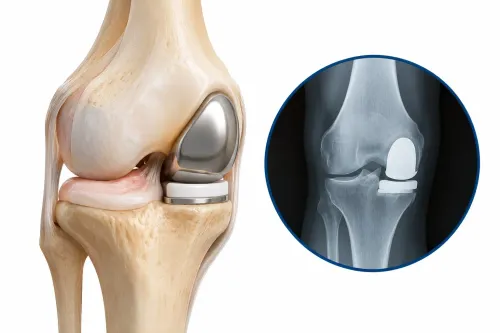
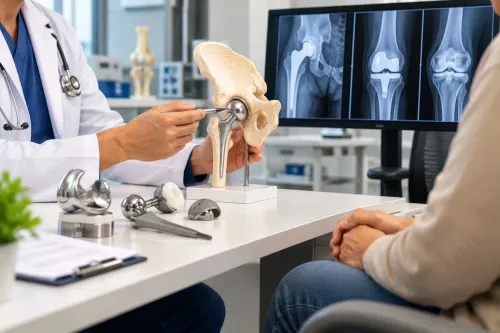
Reconstruction restores function, not merely bone continuity. Internal fixation holds fragments at the correct length, alignment, and rotation; joint reconstruction restores a congruent, stable joint surface; and soft-tissue repair protects the repair while enabling movement.
A continuous bone on an X-ray does not prove useful function if rotation, blood supply, coverage, or joint motion remains poor.
- Bone grafting fills a defect and provides a scaffold or living cells for new bone formation.
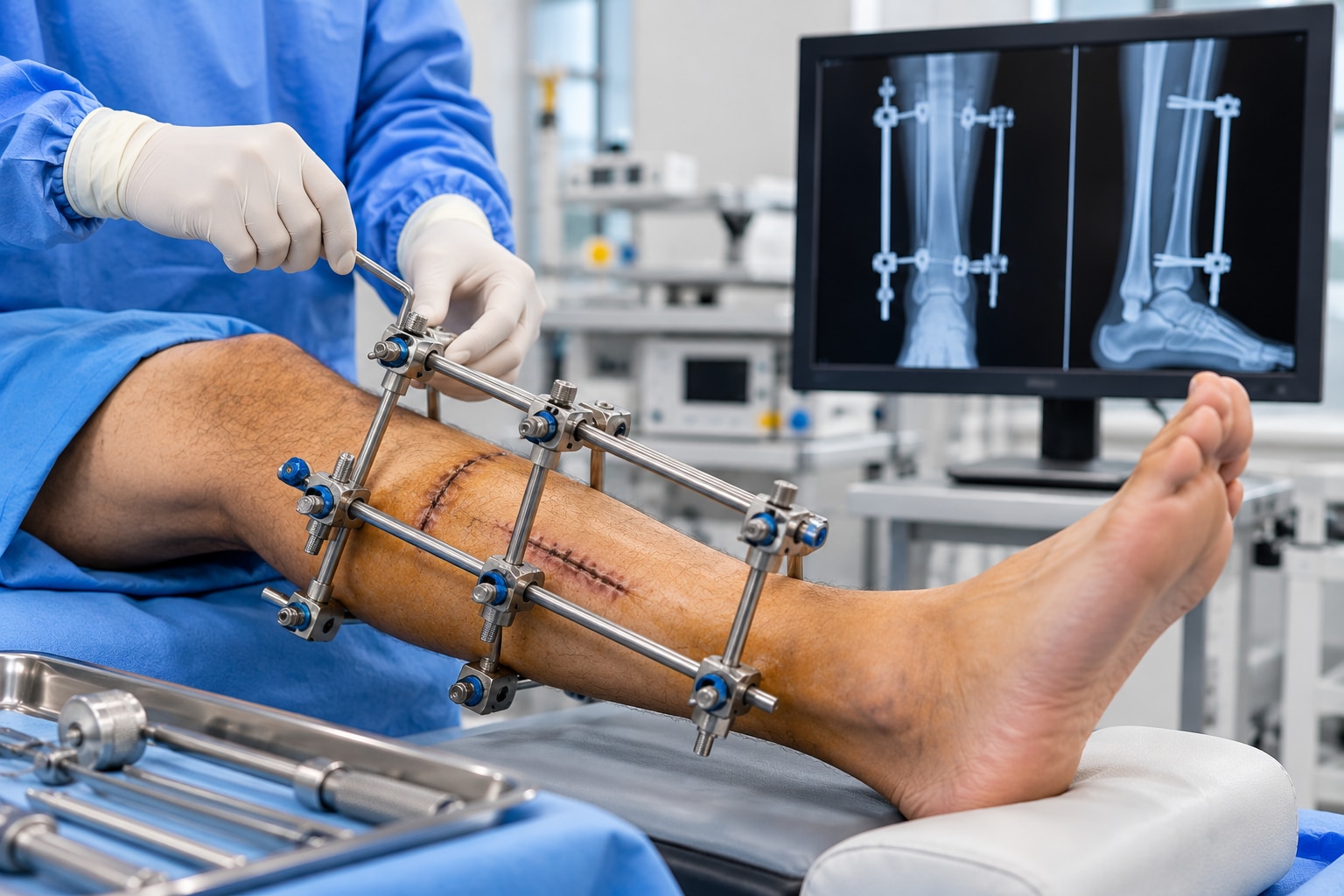
- Bone transport gradually carries a bone segment through a regenerated bone corridor to bridge a large gap. Circular or monolateral frames can mean months of wear, pin-site infection, stiffness, regenerate problems, and docking-site surgery if the two bone ends do not unite.
- Deformity correction addresses malunion by restoring a limb’s length, axis, and rotation.
- Tendon, ligament, nerve, and vessel reconstruction restores movement, stability, sensation, or circulation.
- Soft-tissue reconstruction supplies durable coverage when skin, muscle, or other tissue is missing.
Graft choice depends on defect size, infection, blood supply, bone quality, and the function required—not on one universally best material.
Autograft uses your own bone but creates a donor site; allograft avoids that second operation but has slower incorporation; synthetic substitutes fill selected defects without living bone; vascularised bone grafts bring their own blood supply for difficult biological environments. In the Masquelet approach, surgeons remove dead or infected tissue and place a temporary cement spacer.
After about 4–8 weeks, they remove the spacer and pack the induced membrane with graft, adjusting timing to the wound and infection status.
Why Do Open, Contaminated, or Infected Injuries Need More Than One Operation?
An open or infected fracture often needs staged surgery because swelling, contamination, damaged blood vessels, or dead tissue makes immediate final fixation unsafe. The first operation protects life and limb; later procedures restore durable bone stability and soft-tissue cover.
- Give intravenous antibiotics, assess the wound and blood supply, excise contaminated or dead tissue, and repair or bypass injured vessels when necessary.
- Apply temporary external fixation to maintain length and alignment without placing permanent implants into an unsafe wound.
- Protect exposed bone, tendons, vessels, and implants with planned soft-tissue coverage. Repeating temporary operations without a coverage plan can further injure tissue and raise infection risk.
- Perform definitive fixation and soft-tissue coverage during the same operation when feasible. If treatment must be staged, complete both within 72 hours of injury when the patient and wound are ready.
Suspected fracture-related infection needs more than a surface swab. Before antibiotics, when the patient is clinically stable, surgeons take multiple separate deep tissue or implant specimens during revision; a superficial swab can identify skin colonisation instead of the organism in the bone or implant.
A wound that looks dry and quiet does not exclude infection. Persistent pain, drainage, loosening, delayed union, or abnormal imaging can prompt investigation. Terms such as reconstructive orthopaedic surgery Worli describe a location-based search, not a specific operation; the injury findings determine the sequence.
How Is Useful Function Measured During Recovery?
A continuous bone on an X-ray does not prove useful recovery. Clinicians also check usable length, alignment, rotation, joint congruity, stability, blood supply, soft-tissue healing, and controlled movement; an unnoticed rotational error can make walking, gripping, or climbing stairs difficult.
Rehabilitation is staged around fixation strength, bone quality, defect size, wound healing, and imaging. Early controlled movement can reduce stiffness and muscle loss when fixation permits, while weight-bearing stays protected or increases gradually. Pain relief is not permission to exceed the surgeon’s loading limits.
During follow-up, ask whether the plan includes:
- Repeat X-rays, or CT when union remains unclear
- Range of motion, limb alignment, rotation, stability, pulses, sensation, and wound condition
- The exact weight limit, movement limits, walking aid, and date for reassessment
- Smoking or nicotine cessation, adequate protein and calories, and checks for diabetes, thyroid disease, vitamin D deficiency, or other metabolic problems
Nonunion has mechanical and biological causes. Excess motion, a loose or broken implant, or poor alignment requires mechanical correction; infection, poor blood supply, nicotine exposure, malnutrition, and metabolic illness require biological treatment. Adding bone graft alone cannot fix an unstable construct or untreated infection.
Limb salvage is not automatically more functional than amputation. Shared decisions should compare rehabilitation time, repeat operations, complications, work, daily activities, and personal priorities. Search terms such as reconstructive surgery for complex bone injuries Worli and bone injury reconstruction in Mumbai describe locations, not procedures; suitability depends on your injury and goals.
Frequently asked questions
Which bone injuries need reconstructive surgery?
Reconstruction may be needed for open, crushed, segmental, infected, malunited, nonunited, or joint-surface fractures, especially when tendons, ligaments, nerves, vessels, or soft tissue are also damaged.
How do surgeons choose between reconstruction and staged surgery?
The decision depends on contamination, infection, blood supply, tissue loss, bone loss, joint involvement, overall health, and whether the wound can safely support definitive reconstruction.
How are complex bone injuries rebuilt?
Surgeons address bone loss and alignment with fixation or grafting, restore joint surfaces where possible, and repair or replace damaged soft tissue, tendons, nerves, or vessels.
Why can open or infected fractures need more than one operation?
Repeated procedures may be required to remove contaminated or dead tissue, control infection, reassess blood supply, stabilise the fracture, and provide durable bone and soft-tissue coverage.
How is useful function measured during recovery?
Assessment includes pain, range of motion, strength, sensation, walking or hand use, joint stability, healing on imaging, and your ability to perform work and daily activities.
Keywords